- An important term to know is “bounce” – a bulge on the bottom (sole) of the club which creates an angle between the leading edge and the ground. This enables the club to displace extra sand when swung in a bunker, and it distinguishes the sand wedge from its siblings. For mid- to high-handicap players, bounce will get you out of those bunkers.
- Wedges are frequently made of softer metals such as copper or beryllium and sometimes feature pieces called “inserts” built into the clubface. Both designs are intended to increase touch and feel around the green, and assist the golfer"s ability to put backspin on the ball to better hold the green.
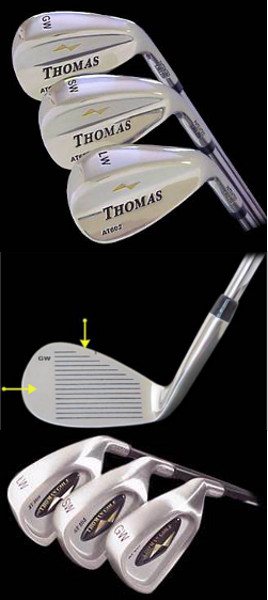
- AT 602 GW player"s iron
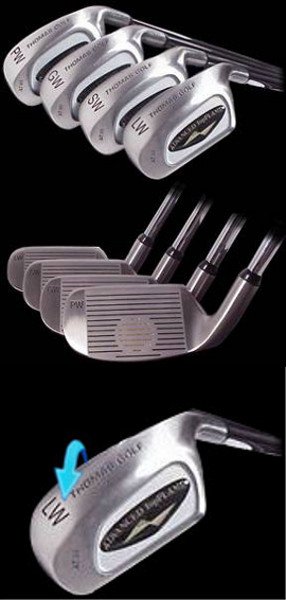
- AT 505 cavity back
- AT 510 hallow head
- AT 100 square head
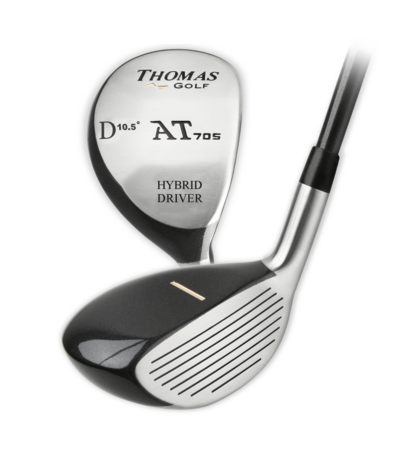
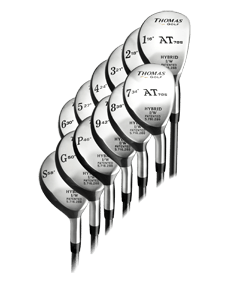
- AT 705 hybrid head
- High lofted fairway wood
- Stay centered. This is the most important of all the tips. It is vital that you stay centered throughout your swing when you are hitting a wedge shot so that you can give yourself the best possible chance to make solid contact. You don’t need a big, long swing in order to generate club head speed with a wedge – you just aren’t trying to hit the ball that far. Instead, you want to focus on balance and keeping your weight centered between your feet. The ball should be almost exactly in the middle of your stance, so holding your balance while you turn through the backswing is a crucial piece of the puzzle.
- Hit down through the shot. Many golfers see the wedge shots of other players flying high up into the air so they think that they need to ‘help’ the ball up in some way. This is not true. Instead, you actually want to hit down through the ball aggressively and allow the loft of the club to do that work for you. Wedges are designed with plenty of loft to get the ball high in the air – all you need to do is hit down cleanly on the back of the ball and the club will do the rest.
- Trust the swing. You are using basically the same swing that you use with the rest of your irons, so you should trust in it just like you do on any other shot. For some reason, many amateur players start to lose trust when they hit full wedges and they end up looking up early only to miss-hit the shot. Remain committed to the swing and make sure your eyes are looking directly at the ball until after it is gone.
- Chip and run. If you are looking for the ball to land on the green and roll out a good distance, you are going to want to reach for your pitching wedge. Since it has the least loft, it will provide you with the flattest trajectory on the chip – leading to more roll out. Also, by using the pitching wedge you can avoid generating too much spin on the shot, which could cause the ball to come up short. Practice hitting basic chip shots using your pitching wedge from a variety of lies and consider this your ‘basic’ chip shot that you can go to when you have plenty of green to work with.
- Check and hold. With this chip shot, you want the ball to bounce once or twice after it lands on the green, and then stop quickly with the help of backspin. This is a shot that you are going to hit with your most lofted club, in this case the 58* wedge. You will only be able to hit this kind of a shot when you have a clean lie on the short grass so you can make solid contact with the ball and impart plenty of spin. This is a shot that takes practice to execute consistently, so work on hitting a chip shot that bounces and then stops quickly in practice before you try it on the course.
- Pitch and run. If you want to hit a running pitch shot from farther off the green than a standard chip, try using your 52* approach wedge for the job. This club is a perfect choice because it has enough loft to help you carry the ball up onto the green, but not so much loft that the ball will stop too quickly. The right distance for this kind of shot is somewhere between 5 and 15 yards off the side of the green.
- Bunker shot. One this one, you have a choice between your 52* and 58* wedges. For bunker shots that have a high lip in front of you, obviously the most lofted club is going to be your best bet. However, for shots that are a little longer across the green to reach the hole, and where the lip of the bunker is not an issue, the 52* wedge can make it easier to cover the distance and get close to the target. Practice hitting bunker shots with both of these wedges so you can be prepared to use either one on the course depending on the circumstances in front of you.
- Flop shot. This is the most challenging of the chip shots you can hit around the green, and you will want to use your most lofted club to attempt it. The idea is that instead of stopping the ball with backspin (like you did with the check and hold shot), you are going to stop the ball simply by dropping it onto the green from as high as possible. To hit the shot, you will need to open the face of your wedge and make an aggressive swing – cutting under the ball as much as possible. This is a shot with a high degree of difficulty, and you should only try it on the course after plenty of practice.


From touring pros to weekend golfers, everyone is carrying more wedges these days. One statistic explains the phenomenon: More than 70 percent of the game is played from 100 yards or closer.
Lofts of 45 to 60° characterize the wedges. Combined with generally being heavier than the other irons (2-9), wedges are designed to help you achieve a higher trajectory from either sand or grass.
How many wedges should you carry? Consider this info when deciding:
Today, there are four basic types of wedges to consider. From longest distance to the shortest:
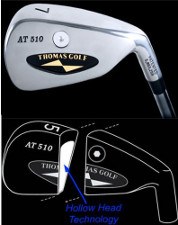
Pitching Wedge (PW)
For longer approach shots, with spin that will stop the ball close to where it lands or even back up under certain conditions, the pitching wedge is a very good choice. It has minimal bounce and typically a 45-50° loft.
Gap Wedge (GW)
The gap wedge fits between the pitching and sand wedges. It will generally hit shots about 10-15 yards shorter than a pitching wedge and 10-15 yards longer than a sand wedge.
In most golf club sets there is a two-club gap between, for example, a 46° PW and a 55° SW. That creates a yardage gap of 20-30 yards, requiring the golfer to take a partial swing with the PW on in-between shots – a difficult task for most golfers. Adding a GW to your set eliminates this distance gap, aiding consistency on shots between PW and SW range.
Thomas Golf covers the gap with a number of options:
Sand Wedge (SW)
This club has several features that distinguish it from other wedges, starting with lots of bounce. The standard amount is about 12°. All sand wedges are designed to reduce the risk of digging in when hitting from bunkers.
Lob Wedge (LW)
There are times on the golf course when a player needs to get the ball up very quickly and land it softly, covering a short distance. This is where the lob wedge comes in. It is the most lofted club available, typically around 58-60°.
Getting to Know Your Golf Wedges
The set of wedges that you have in your golf bag might have more to do with your final score at the end of the round than any other clubs that you carry. Wedges get used on nearly every hole for many golfers, making them vitally important to shooting good scores and improving your game. You should be comfortable with all of the wedges you carry, including knowing exactly how far they fly in the air with a full swing. Being able to hit a variety of shots with your wedges is a valuable skill because it will help you to deal with all of the difficult situations you can encounter throughout a round.
How many wedges you use as part of your set of golf clubs is a personal decision based on your playing style and the courses you play, among other things. There are no lack of equipment options on the market today, including sand wedges, lob wedges, and more. If you find that there is too much yardage difference between your sand wedges and your pitching wedge, you may want to add an approach wedge (also called gap wedge) to your set.
The exact loft of your wedges can vary based on the specific model you pick out, and the manufacturer who makes the club. Lob wedges usually have between 58 – 62 degrees of loft, while sand wedges come in around 55*. An approach wedge will usually have 52*, but again, these numbers can vary slightly from club to club. The important thing is that you have a nice spread of lofts between your wedges so they aren’t too close to each other in terms of distance. For example, carrying a 52* approach wedge and a 54* sand wedge wouldn’t make much sense because those two clubs would fly almost exactly the same distance.
While it might be intimidating to think about having so many wedges in your golf bag, they should all perform basically the same way. In fact, once you know how to hit a pitching wedge, you should be comfortable with hitting the rest of your wedges as well. You have probably already learned how to hit a pitching wedge in your golf experience, as it is one of the clubs that most people use a lot when just getting started. Thanks to that experience, you shouldn’t have any trouble adapting your swing to the rest of the wedges in your bag.
Of course it is fun to blast a long drive off the tee perfectly down the middle of the fairway – but it only pays off on the score card if you can follow it up with a great wedge shot to within a few feet of the hole. Between hitting approach shots from the fairway to chipping from the rough around the green, wedges are versatile clubs that can serve you well once you spend some time practicing their various uses.
Building Your Set of Wedges
There aren’t too many decisions to be made when you are putting together your set of clubs beyond choose what brand and model you wish to purchase. As far as the composition of the set goes, most of the choices are pretty obvious. You are going to have at least a driver and a three wood, and either a five wood or a hybrid club. Along with those, you will have a set of irons that includes 5-PW at a minimum, and of course a putter. That leaves you with 10 clubs already in your bag, with only four more spots open. If you decide to carry a four iron, which most golfers do, that puts you down to three open slots.
At this point, you can go one of two ways – either add three more wedges to your bag, or add two wedge and a long club such as a three iron or additional fairway wood/hybrid. If you add three wedges, you will probably want an approach wedge, sand wedge, and lob wedge. Should you opt for only two wedge, you may end up picking something in the 58* range that can serve as both your sand wedge and lob wedge. There is no right or wrong answer to this question, and you will see professional golfers using both configurations.
Much of this decision comes down to how confident you are with your longer clubs, and how well you hit your long irons. For example, if you can hit long and straight shots with your four iron, you probably don’t need an additional hybrid club as those two would go very similar distances. So, in this case, you could opt for the extra wedge to give you even more options around the green.
However, if you are unsure of your long game and feel like you need all the help you can get for long par threes and par fours, having an extra fairway wood or hybrid might be your best choice. It is absolutely possible to get by with just two wedges (beyond your PW), and the benefit of an extra long club in your bag might be too much to pass up. You will need to think about your game carefully and decide where your weaknesses are before you make the final decision on going with two or three wedges in your bag.
To help make this decision a little easier, try the following exercise. During your next round with your current set of clubs, keep track of which club you hit for each shot during the round. You can just make a little notation on your scorecard at the end of every hole with a list of the clubs used. It shouldn’t take but an extra few seconds to complete the task.
After the round when you have some time, go back through this list and think about each shot that you hit and your club selection. Would you have preferred to use a different club if it had been available in your bag? If you think of shots that you would have rather used a different club, make a note of that on a separate piece of paper. Write down what club you did hit, and what club you would have preferred to have available.
Go through this exercise over the course of several rounds. At that point, look over your ‘master’ list and see if you can find any pattern in the results. Are you consistently wishing you had an extra wedge? Do you need another hybrid club to tackle a certain long par three at your favorite course? These notes can go a long way toward helping you determine what the composition of your set of clubs should look like.
For the average golfer who shoots scores in the high 80’s or low 90’s, carrying three wedges (beyond the PW) is probably not necessary. The average player will likely get more use out of an extra long club than they will that additional wedge. However, everyone’s golf game is different, so it is worth the time to think through the process for yourself and decide which course of action is best.

Hitting a Full Shot Wedge Properly
One of the advantages of getting comfortable with hitting your wedges is the versatility that they offer. You can hit many different shots with any one of your wedges by using different techniques, closing or opening the club face, etc. However, learning how to hit a quality full swing wedge shot is an important skill that you should work on mastering before moving on to the more complicated techniques for other shots.
If you have never had the right technique for hitting golf wedges explained to you, there might be a little confusion as to the proper mechanics that go into a full swing. By having a full swing with your golf wedges explained in comparison to the rest of your game, you should be able to better understand how the swing works and what are the important elements. Following are three important fundamentals that you want to pay close attention to when hitting a full shot with any of your wedges.
Just by following those three basic pieces of advice, you should be able to hit quality full shots with your wedges. Once you put in some practice and gain more confidence over time, you will find that wedges are actually the easiest clubs in your bag to hit. The shorter length of the shaft gives your swing more margin for error, and the ball isn’t likely to fly very far off line when you are only hitting it 100 yards or so. No matter which wedge you happen to be hitting, keep your balance, hit down through the shot, and trust yourself all the way through impact.
Picking the Right Wedge for a Chip Shot
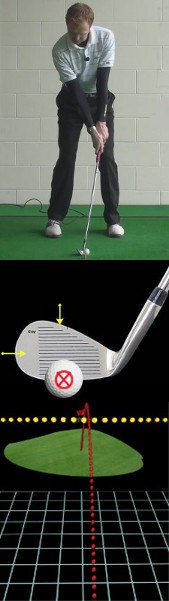
Aside from hitting full shots, chipping is one of the most important jobs that your set of wedges has to handle. One of the biggest skills in chipping takes place before you ever even start your swing – picking the right wedge to use for the shot. When you are able to put the right club in your hands for the task in front of you, executing the shot itself becomes all that much easier.
For the purpose of this discussion, let’s imagine that you are carrying two wedges, along with your pitching wedge. So, your options when it comes to wedges for your chip shots are the pitching wedge, a 52* approach wedge, and the 58* lob wedge/sand wedge. For each of the following scenarios, one of these wedges will be better suited for the job than the others.
The five variations of chip shots above should give you plenty of options around the greens during your next round. Take some time to practice each of these individual shots so you are ready to deal with them when they come up on the course. The more practice time you have under your belt on these five chip shots, the more your confidence will grow.
The Importance of Trajectory
Controlling the trajectory of your golf shots is important regardless of which club you are hitting – but that is especially true when talking about your wedges. The problem that many amateur golfers have when hitting their wedges is they feel like they need to hit them as high as possible just because they are highly lofted clubs. This is a mistake that can make it difficult to control your distance properly. In reality, you want to hit your wedges as low as possible while still stopping the ball quickly on the green.
The reason that you want to hit wedges as low as you can is because the higher you hit the ball up in the air, the more difficult it becomes to predict just how far the ball will fly. As the ball climbs higher and higher into the air, the wind becomes more of a factor, and you simply sacrifice control over the ball. Ideally, you will be able to make a full swing at your wedges and yet have the ball only fly with a medium trajectory instead of rocketing high up into the sky.
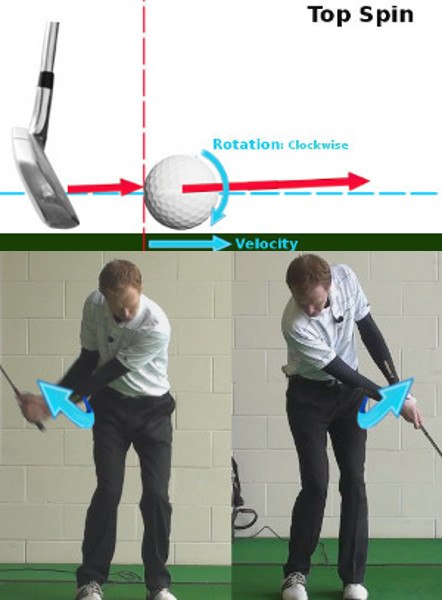
To do this successfully, you want to limit the amount of release you allow the club to have at impact. A good wedge swing is one that is controlled mostly with your big muscles, specifically your shoulders and lower body. Your hands and arms should be passive throughout the swing, which works well with wedge shots because you don’t need to generate any additional power at the bottom. You are only concerned with a solid strike, not with sheer power, so take your hands out of the swing as much as possible to help lower your standard ball flight. Also, moving the ball back slightly in your stance can help toward this end.
Of course, you might find an occasion on the course when you actually do need to toss the ball way up into the air – such as when you are playing a course with firm greens and need the extra loft of the shot to stop the ball quicker after it lands. To get that extra height, do just the opposite as above – move the ball slightly forward in your stance and allow your hands to release the club more aggressively through impact. With some practice, this should result in a ball flight that gains additional elevation and comes down soft.