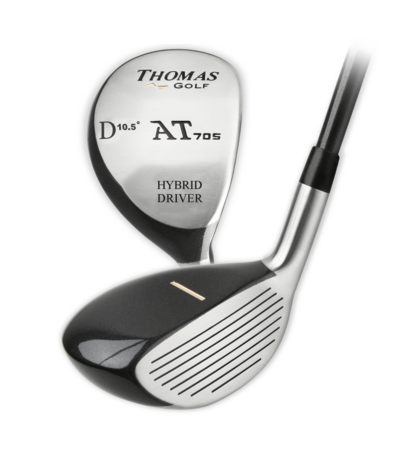


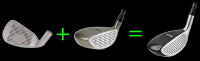
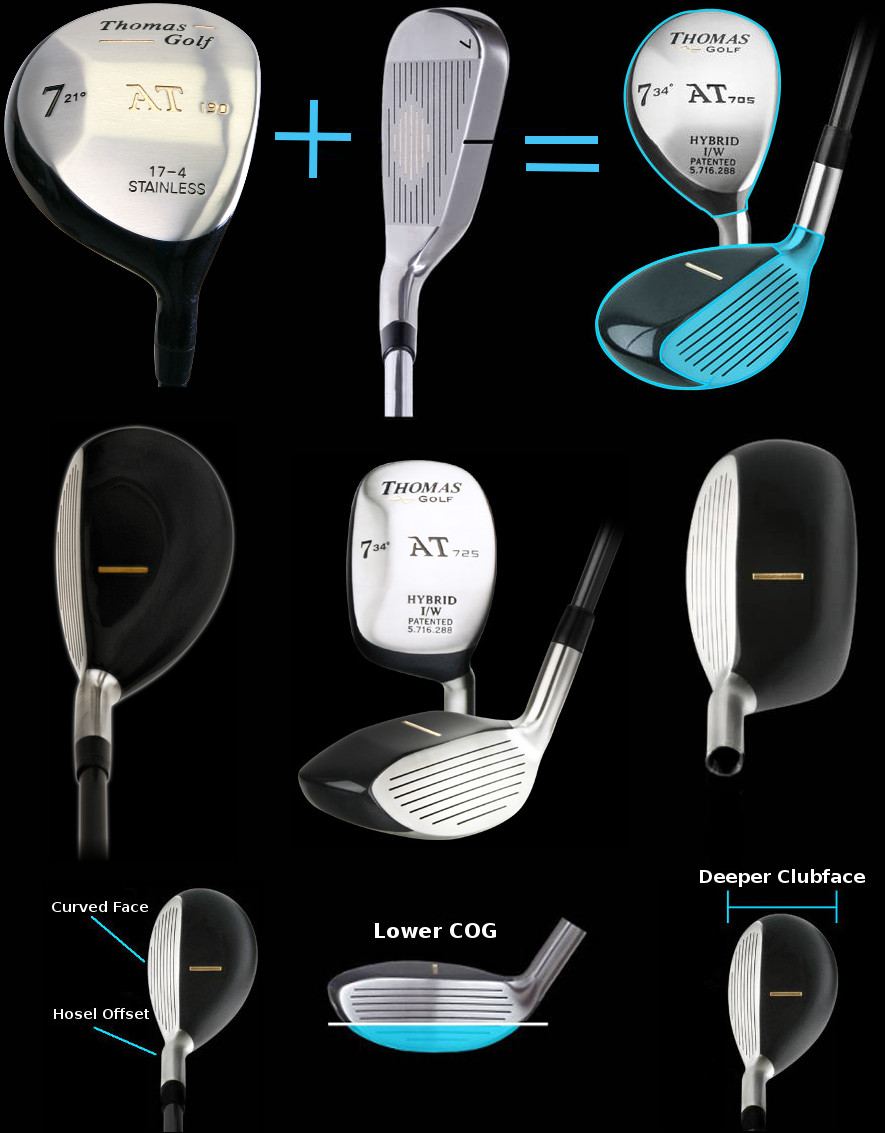
A hybrid golf club is an iron or wedge that has been totally redesigned to incorporate the many positive characteristics found in woods, including a wider sole, gear-effect spin correction and a larger head. The result is a forgiving, easy-to-hit replacement for conventional irons.
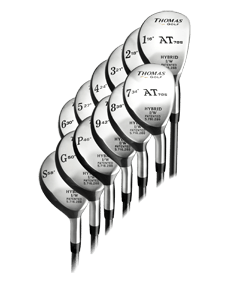
Most hybrid irons have the same loft, length and weight as a traditional iron and are direct number replacements to their iron counterparts. For example, a #7 hybrid iron (7-hybrid) will replace a #7 traditional iron (7-iron).
While some golfers like the added confidence of the large heads of high-lofted woods, others appreciate the medium size of hybrids for shots out of the rough. Golfers also appreciate the hosel offset built into many hybrids, which can reduce the tendency to slice the ball.
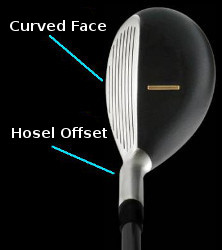 Another wood characteristic you’ll notice right away on hybrid irons #1-9 is their curved faces, an effect known as “bulge and roll.” As with drivers and fairway woods, this curvature creates the shot correction called “gear effect,” which naturally straightens shots hit on the toe or heel.
How hybrids are used: Hybrids are played using the same or similar ball position as traditional irons. Your hybrids should also be built to the same length, flex and swing weight as your irons. Many golfers have found great success by replacing their traditional irons with hybrid irons, especially players who prefer to sweep the ball off the ground rather than hitting down and taking divots.
Hybrid wedges: These clubs are better out of long grass than traditional wedges because they tend to glide through the blades and are less likely to get hung up. The hybrid sand wedge is much simpler to hit than a traditional sand wedge because it doesn’t require a special setup for bunker shots; simply set up and swing as on a normal iron shot, hitting about 1.5 inches behind the ball. Using a hybrid from the sand removes a lot of variables, so all you need to think about is how hard to swing.
Hybrid Golf Clubs Have Taken the Game by Storm
The makeup of sets of golf clubs went unchanged throughout much of the history of the sport. For a long period of time, sets were composed of woods and irons, along with a putter. Sure, there have been major improvements in technology over that time, including the transition from woods that were actually made of wood to metal ‘woods’. The method of iron building has changed as well, along with the technology and materials involved in developing shafts for the clubs. Despite all that change, the general design characteristics of the clubs had limited golfers to choosing simply between woods and irons.
That all changed with the introduction of the hybrid clubs. As the name would indicate, hybrid clubs are a combination of a wood and an iron to provide golfers with a new option to deal with certain shots on the course. From the moment they were introduced to the market, the appeal of hybrids was obvious. They brought together the ease of hitting a wood with the accuracy and consistency of an iron. Many golfers have an easier time making good contact with their woods as compared to their irons because of the shape of the club head and the flatter lie angle. However, just using a set full of fairway woods was never really a practical solution because they lacked the accuracy to get the ball close to the hole. For that reason, hybrid clubs were invented and quickly became a hit.
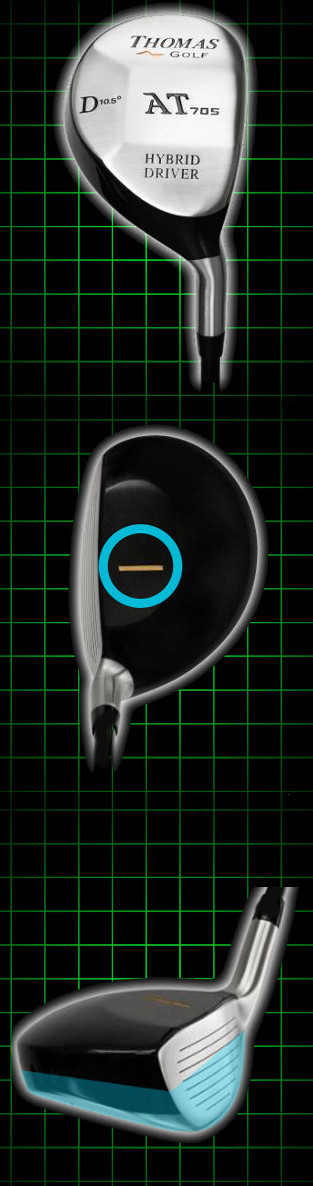
Thomas Golf hybrids exhibit all of the qualities that you would expect to find in a quality golf hybrid. The Thomas Golf hybrids are offered in a couple of different head designs, but the basic idea is the same - to help the player make quality contact from a variety of lies and get the ball up into the air successfully. When you decide to add some hybrid clubs to your bag, you will want to try a variety of different styles to make sure you locate the one that works best for you.
There is another reason that hybrid clubs were so quickly able to gain popularity and market share in the golf club industry - the difficulty that most players have hitting long irons. Traditionally, golf iron sets included 3 iron through pitching wedge, even though many high handicap golfers struggle to hit even decent shots with the 3 and 4 iron. Often, those clubs just sat in the bag and collected dust while the golfer tried to figure out another solution from the 175 yard to 200 yard range. Although the golfer was able to carry 14 clubs under the rules of the game, really only 11 or 12 of those clubs would be used on a consistent basis. As soon as hybrid clubs became available, many golfers quickly saw the opportunity to toss those 3 and 4 irons aside in favor of hybrids so they could once again feel comfortable hitting all of the clubs that they carry.
Today, you would be hard pressed to find very many golfers at your local course that don’t have at least one hybrid club in the bag. In fact, hybrids have proven to not be just for amateur golfers - most of the tour professionals have also taken to using these player-friendly clubs. If you haven’t yet joined the hybrid club movement, or are considering adding more of them to your bag, you will likely find that the positives of hybrid clubs far outweigh any potential drawbacks.
Picking Out Your First Hybrid Golf Club
For those who have yet to purchase a hybrid club, starting the shopping process can be a little bit intimidating. Sure, you can read some golf hybrid reviews to get an idea of which are the most popular models, but that won’t necessarily help you decide on the right one for you specifically. Golf hybrid reviews are a good way to get started on your search, but you are going to need to do some additional homework before you can make an informed decision for your purchase.
Assuming your plan is to buy just a single hybrid to start with, you will want to start by determining what current club in your bag you are going to replace. For many golfers, the answer to that question will be the three iron. If you don’t find that you use your three iron very often anyway, there won’t be anything lost by moving it out of your bag and putting the hybrid in instead. With that in mind, you will want to look for a hybrid in the range of 21* of loft to get the right distance to replace a three iron. If you get a club with lower loft than 21* or so, you will likely have a club that hits the ball too far and leaves you with a large gap between your four iron and your shortest fairway metal. Likewise, if you go with much more loft than 21*, you will find that the hybrid goes about the same distance as your four iron, which defeats the purpose of adding the new club to your bag at all.
Once you know what loft you want to purchase, you need to decide if you want to get a hybrid club with a steel or graphite shaft. For most golfers, opting for graphite is going to be the best way to go. A graphite shaft should provide you with two benefits - for one, it can make it easier to get the ball off the ground and up into the air. Also, you should be able to achieve slightly more distance when swinging a hybrid club with a graphite shaft. The best argument for using a steel shaft in your hybrid club is if you are more concerned with accuracy than high ball flight and distance. If you would like to use your hybrid in windy conditions and to hit punch shots out of trouble, it might be worth considering a steel shaft rather than graphite.
The last step in picking out your hybrid club is trying a few models to determine which works best for you and your swing. There are plenty of quality options on the market, and just because one club is right for one golfer doesn’t mean it will be right for another. With that in mind, make sure that you try out multiple models so you can get a good idea of how each will perform with your swing. You want to find the club that is able to produce a ball flight that falls in line with the rest of your set of clubs, so you aren’t trying to adjust to a unique ball flight each time you pull the hybrid out of the bag. For example, if you hit a slight draw with most of your clubs, don’t choose a hybrid that tends to produce a fade - that will only serve to confuse you on the course and make it difficult to execute quality shots. Once you find a hybrid club that has the proper amount of loft, looks good to your eye, and produces the right ball flight, you will be ready to make your purchase.

How to Hit a Hybrid
Figuring out how to hit a hybrid golf club can be a little confusing at first, even though they are designed to be easy to hit. Most golfers have two different swings with slightly different fundamentals depending on whether they are hitting a wood or an iron. Since the hybrid club falls between those two options, it can be difficult to figure out which swing to use and how to adjust your technique properly to get the best possible performance out of the hybrid. Ideally, you want to make as few changes as possible to your current swing so that your hybrid club can quickly just become another option in the bag that you trust even under pressure.
If you are unsure how to hit a hybrid golf club, it is best to start out by thinking of them like a long iron that is just easier to hit. You want to try to make the same swing you would make when hitting a long iron - of course, with better results. Some of the fundamentals to pay attention to when making this kind of swing include -
- Solid balance. Good balance is important for any golf swing that you make, but it is especially important when hitting hybrids or long irons. Because of the length of the club, hybrids are harder to make solid contact with than your short irons will be - therefore, balance is especially important to help you impact the ball perfectly at the bottom of your swing. Pay attention to your backswing and make sure your weight isn’t drifting away from the target. If it is, you will have to slide back forward during your downswing, meaning you will lose power and ball striking consistency.
- Make an upright swing. The primary difference between the swing you make with your woods and the swing you use with your irons is the swing plane that is used. Woods tend to be swung on a flatter plane than irons, because of the way the clubs are designed. When swinging your new hybrid club, try swinging it on that same upright plane that you would use with your irons. That way, you will be able to get the club down into the grass to deal with a variety of different lies, and you should also enjoy more accuracy.
- Move the ball up slightly in your stance. The only thing that you want to do differently from your iron swing is moving the ball up in your stance so you can make ‘flatter’ contact and produce a quality ball flight. As compared to your iron swing, try moving the ball up in your stance between two to three inches in order to create an ideal impact position. That amount of change might not sound like much, but it is important when it comes to the ball flight that you end up with.
One of the great things about hybrid clubs is that they take relatively little adjustment once you hit a few practice balls and start to get the feel for it. If you have done your homework and purchased a hybrid club that works for your swing, it shouldn’t take more than a few rounds of golf to get comfortable and confident using your hybrid clubs in a variety of situations around the course.

When to Use Your Hybrids on the Course
Now that you have a hybrid club or two in your bag, and have spent some practice time learning how to use them, it is time to head to the course and put them to the test. Just like any other club in your bag, it is important to know how and when to use your hybrid clubs so you can get the best possible performance from them. If you hit the hybrid club at the wrong time, it won’t matter how nicely it flies through the air - the shot won’t be what you needed.
While there are nearly countless opportunities to use your hybrid clubs throughout a round, the following three occasions are particularly well-suited for a hybrid.
- Tee shots on short par fours. Too many amateur golfers make the mistake of using their driver off of the tee on every par four, even if they don’t need the distance. If you find yourself on the tee of a short par four where you don’t need driver distance to set up your approach shot, consider using your hybrid off the tee instead. This strategy will make it easier to hit the fairway, while still providing enough distance to handle most short par fours. By getting over your addiction to the driver, you will find that you are playing from the short grass more frequently.
- Going for the green in two on par fives. One of the great advantages to carrying a hybrid club instead of a long iron is the ability to attack more par fives in two shots. Once you hit a good drive on a par five and find your ball in position to possibly reach in two, you will have a choice to make - go for the green, or lay-up. If you only had a long iron to try hitting into the green, you might opt for the layup option. However, with a hybrid available, you might be encouraged to go for the green more often. Hybrids usually hit the ball higher and farther than long irons, both attributes which will help you get the ball on or near the green.
- Handling long par threes. The long par three is often the most difficult hole on the course for amateur golfers to deal with - but a hybrid club can be a perfect solution to that problem. Instead of hoping to get a long iron somewhere up near the green so you can chip and putt for par, your chances of getting a hybrid club onto the green go up significantly. Considering the fact that most golf courses have at least one or two long par threes included in their design, you will likely find that the hybrid club is used frequently on par three holes during many of your rounds of golf.
Another option for using your hybrid club is for a ‘bump and run’ chip shot around the green when you have a good lie and no major obstacles in your way to deal with. The next time you go to the golf course to practice your short game, try hitting a few chip shots with your hybrid club to see how effective this option can be. Expect it to take some practice before you have a good amount of control over the distance that you hit these kinds of shots, so spend some time on it prior to using this shot out on the course.
As you get more and more experience on the course with your hybrid clubs, you will likely find more and more opportunities to use them. The important thing is to get comfortable with what kind of distance you can expect from your hybrids, and what ball flights they will produce. Once you have that information, it will be easy to decide which shots call for the use of a hybrid.
Can You Make a Full Set from Hybrids?
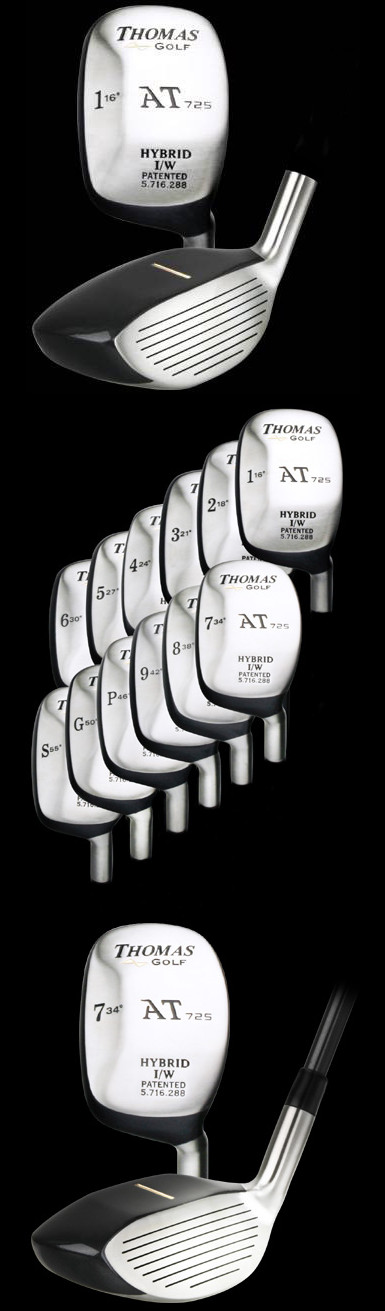
With all the talk about how useful and easy to hit hybrid clubs are, you might be wondering - is it possible to just make a full set of hybrid clubs? Yes - it is. Companies like Thomas Golf offer a full range of hybrids that run the complete selection of lofts that you would see in a traditional iron set. Rather than using a set of irons to compliment your driver and three wood, you would just carry a couple of traditional woods and hybrids for the rest of your set. While it might be a unique method, there are plenty of positives to taking this approach.
The first benefit you will find to trying this strategy is simply the consistency that you can have throughout your set. Rather than having to move from a hybrid club into your iron set and using slightly different swings for each, you will have the comfort of knowing that you will be looking down at the same type of club for all of your shots. Consistency is a great thing on the golf course, so gaining it in any way you can is something you should consider.
Another advantage to the all-hybrid set of clubs is the way they can deal with any lie that you encounter. Hitting a long iron, or even a mid-iron, from a bad lie in the rough is a task that is almost impossible for most golfers. However, hitting a hybrid from that same lie might be very possible. Conquer shots that you would have once not even attempted just by changing up the composition of your set to include all hybrids. Hybrid golf sets take the fear out of many lies on the golf course that would have once left you thinking about laying up instead of going for the green.
One more thing to consider regarding the use of hybrid golf sets is the higher ball flight that can be achieved for players with a lower swing speed. If you have a below average swing speed and have always struggled to get much loft on your iron shots, you may have trouble stopping the ball on the greens - especially when the conditions are dry and firm. By switching to a hybrid golf set, you may be able to add some height to your ball flight and get the ball to stop faster after it lands. That can make a big difference in how close you can get the ball to the hole, and how many pars and birdies you are able to make.